
Design a useful AI workflow with clear limits.
These planning resources help local businesses choose bounded automation opportunities, define data and permissions, preserve human responsibility, and review real performance.
- Use-case selection
- Data, action, and approval boundaries
- Monitoring and exception review
A responsible AI automation plan defines the task, trigger, input data, allowed action, output, approval, destination system, responsible owner, failure behavior, and quality review. Start with one repeatable workflow rather than a vague promise to automate the business.
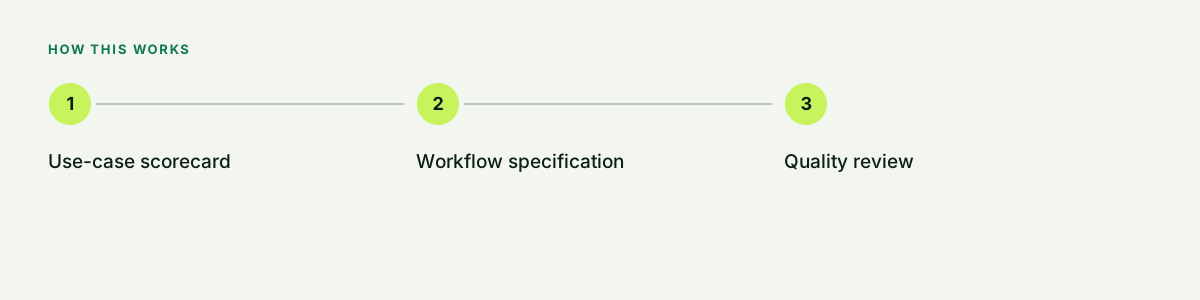
Use-case scorecard
A strong first workflow is frequent, bounded, observable, and supported by reliable information. It should not require the system to make high-stakes or sensitive judgments without qualified human review.
- Frequency and delay
- Input reliability
- Clear acceptable output
- Low-risk failure path
Workflow specification
Write the trigger, sources, transformation, decision boundary, approval, action, CRM update, notification, and error path. This makes the automation testable and maintainable.
- Trigger and inputs
- Allowed action
- Approval and owner
- Failure and retry
Quality review
Sample outputs before launch and at an agreed cadence. Track incorrect classifications, missing context, inappropriate messages, failed integrations, manual rework, and changed policies.
- Test set
- Accuracy and exceptions
- Manual correction
- Version history
Common questions.
Direct answers about fit, process, limits, and next steps.
What should a local business automate first?
Choose a repetitive task with clear inputs and an observable next action, such as routing a complete inquiry or creating an internal follow-up task.
When should AI not send a message automatically?
Keep a human approval step when consent is uncertain, the message is sensitive, advice is involved, pricing or a commitment could change, or the model lacks reliable context.
How is automation measured?
Review completion time, exceptions, quality, manual correction, customer impact, and whether the workflow improved the operating outcome it was designed to support.
Build the next useful part of the system.
Bring the current tools, operating bottleneck, market, timing, and outcome. Dooriax will start with the facts.