
Plan the field workflow before choosing the CRM.
Use these decision guides to define territory, representative ownership, customer data, consent, stages, handoffs, reporting, and the evidence needed for a useful door-to-door CRM.
- Workflow and field checklist
- Data and ownership questions
- Implementation links
A door-to-door CRM plan should document the campaign, territory, user roles, minimum mobile record, consent, dispositions, appointments, orders, downstream outcomes, reporting, and failure paths. The guides below help teams frame those decisions before configuration begins.
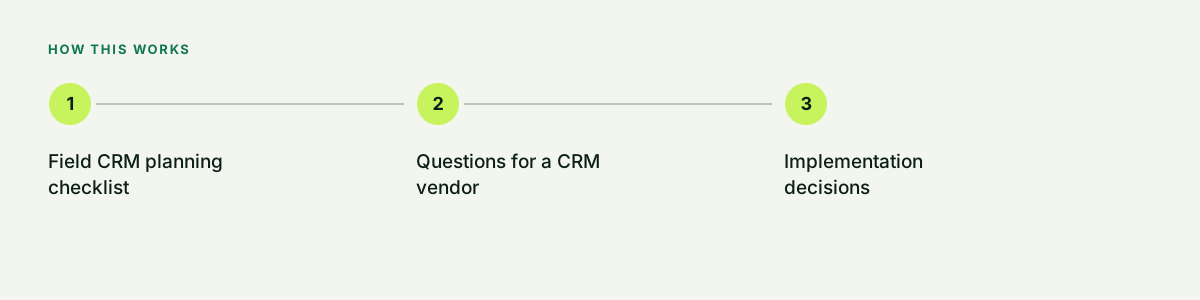
Field CRM planning checklist
Document the real market and workflow before reviewing software. The same platform can succeed or fail depending on field definitions, user ownership, required information, and the handoff after the conversation.
- Territory source and rules
- Representative roles
- Minimum lead record
- Appointment and order states
Questions for a CRM vendor
Ask how the system handles permissions, mobile forms, duplicate addresses, integrations, activity history, exports, reporting, support, and account ownership. Request a demonstration using your workflow rather than a generic sales deck.
- Data ownership and export
- Mobile and offline behavior
- Integration methods
- Permissions and audit history
Implementation decisions
A launch needs a field dictionary, stage definitions, permissions, test records, training, manager views, and a rollback or support path. Start with a bounded pilot when the operating model is new.
- Field dictionary
- Stage criteria
- Pilot group
- Launch review
Common questions.
Direct answers about fit, process, limits, and next steps.
What is the first step in a D2D CRM project?
Write the territory, customer, representative, consent, disposition, follow-up, order, and completion workflow in plain language before configuring fields.
Should every field be required?
No. Require only information needed for eligibility, consent, ownership, the next action, or reliable reporting. Excess required fields reduce mobile use and data quality.
How should a pilot be evaluated?
Review completion, duplicates, follow-up, exceptions, representative usability, manager visibility, downstream handoffs, and the validity of the final outcome.
Build the next useful part of the system.
Bring the current tools, operating bottleneck, market, timing, and outcome. Dooriax will start with the facts.