
A brand system people recognize and your team can use.
Dooriax connects positioning, logo design, color, typography, messaging, websites, and campaign assets into one practical identity. The goal is not a logo sitting in a folder. It is a system that stays recognizable across every customer touchpoint.
- Positioning before decoration
- Reusable logo and color system
- Files and rules for daily marketing
A useful brand identity defines who the business serves, what it should be known for, how it looks and sounds, and how the team applies those choices consistently. Dooriax can scope positioning, logo design, palette, typography, messaging, campaign templates, digital profiles, and handoff documentation as one connected marketing system.
The logo is one part. Recognition comes from the system.
This Dooriax example uses ink and paper for structure, AX green for the wordmark ending, and lime only as a small signal. The rules keep the identity consistent from a small screen to field material without decorative noise.
Plan a brand system
Your digital front door. One operating axis.
- Ink
#0B1E18 - AX green
#0F7654 - Signal
#C7F45D - Paper
#F3F5EF
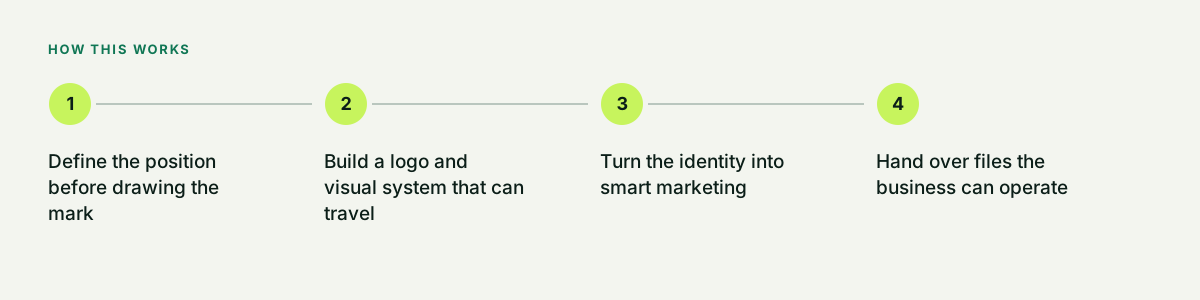
Define the position before drawing the mark
The identity starts with the customer, category, promise, proof, competitive context, and desired perception. Those decisions create a useful brief and prevent the visual work from becoming a collection of unrelated preferences.
- Primary audience and buying context
- Category and service promise
- Verifiable reasons to believe
- Distinctive position and naming context
Build a logo and visual system that can travel
The system should work on a website header, social avatar, proposal, vehicle, shirt, sign, ad, and small mobile screen. Dooriax defines the necessary logo arrangements, color roles, type hierarchy, spacing, and accessibility rules for the approved scope.
- Primary and compact logo arrangements
- Single-color and reversed use
- Color and typography roles
- Minimum size and clear-space rules
Turn the identity into smart marketing
Recognition grows when the same idea appears clearly across the channels customers actually use. The rollout connects the identity to the website, landing pages, social profiles, paid creative, email, sales material, and approved campaign templates.
- Website and landing-page direction
- Social and profile assets
- Ad and campaign templates
- Sales and recruiting collateral
Hand over files the business can operate
A finished identity needs organized source files, export formats, usage guidance, ownership terms, and a record of any licensed third-party assets. The written scope defines what is delivered, who may edit it, and what legal review remains separate.
- SVG, PNG, and print-ready exports
- Favicon and social-image package
- Practical brand reference
- Documented asset and license terms
Common questions.
Direct answers about fit, process, limits, and next steps.
Can Dooriax redesign an existing logo?
Yes. The first review determines whether the existing recognition should be preserved, refined, extended into a fuller system, or replaced. A redesign is recommended only when it solves a documented business or usability problem.
Who owns the final logo and brand files?
Ownership, source files, usage rights, third-party font or asset licenses, and transfer terms are stated in the written scope. Trademark searches and legal clearance require qualified legal review when needed.
Does a new brand guarantee more sales?
No. A clear identity can improve recognition and consistency, but results also depend on the offer, reputation, service quality, distribution, budget, market, follow-up, and execution.
Build the next useful part of the system.
Bring the current tools, operating bottleneck, market, timing, and outcome. Dooriax will start with the facts.