
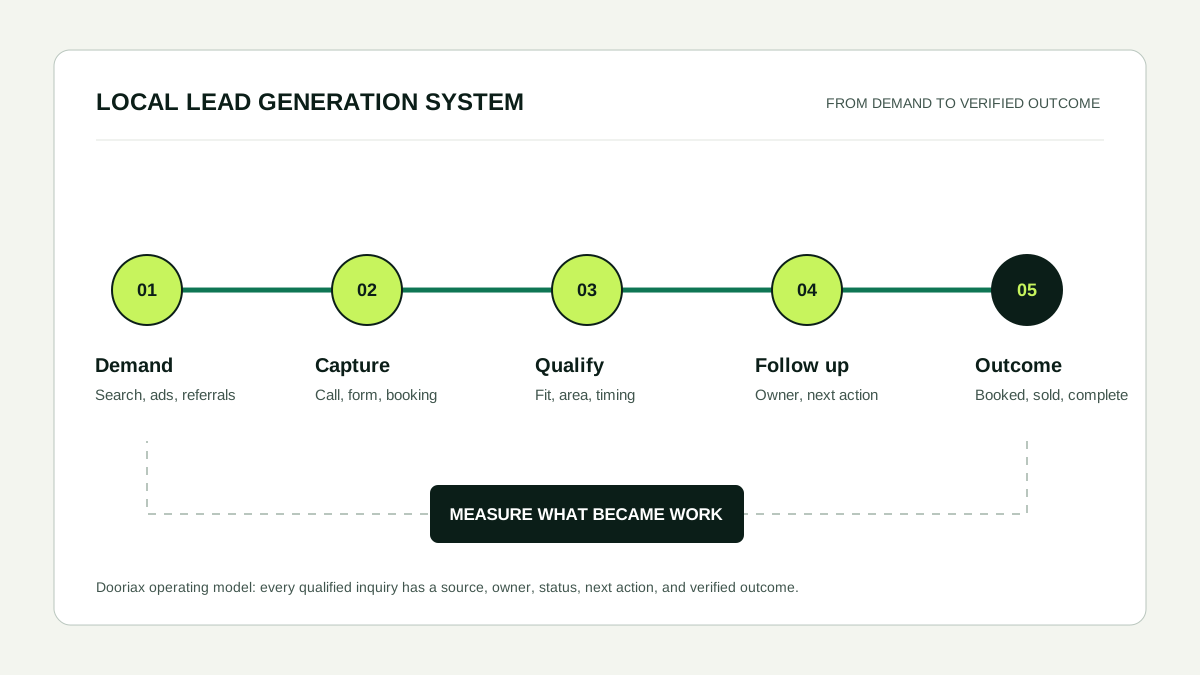
Define a qualified lead before buying another click.
A lead is a person who has raised a hand. A qualified lead is a person the business can reasonably serve. Write that definition in operating terms before selecting a channel, form, or campaign.
| Field | Question it answers | Example record |
|---|---|---|
| Service fit | Does the request match work the business performs? | Repair, replacement, recurring service, estimate, reservation, or consultation. |
| Location fit | Can the team serve the address or market? | Serviceable ZIP code, route, radius, or named location. |
| Timing | When does the customer need a response or visit? | Emergency, this week, planning stage, or a specific date. |
| Contactability | Is there a valid, consented path to respond? | Phone, email, preferred channel, and contact window. |
| Next action | What should happen now, and who owns it? | Call, estimate, site visit, reservation, inspection, or nurture. |
Do not use one definition across every service. An emergency plumbing call, a roofing inspection, a restaurant reservation, and a massage appointment need different qualification rules and response paths.
Use one internet marketing service to connect the channels.
An internet marketing service should do more than publish posts or buy clicks. For a local business, it should connect the website, local SEO, Google Business Profile, paid search, paid social, conversion tracking, CRM routing, and follow-up around one verified offer and service area.
The channels can move at different speeds. Local SEO builds durable discovery. Google Ads reaches active demand. Paid social can introduce an offer or bring back an interested visitor. The landing page, call path, form, CRM, and responsible person determine whether that attention becomes a qualified opportunity.
- One business identity: the name, website, phone, service area, categories, and descriptions agree across the website and trusted profiles.
- One customer promise: ads and pages describe the same real service, qualification requirements, and next action.
- One source record: calls and forms preserve the channel, campaign, page, service, and location that created the inquiry.
- One accountable handoff: every genuine inquiry receives an owner, status, next action, and final disposition.
Dooriax documents this connected approach on its internet marketing services page. The scope starts with the current bottleneck so a business does not pay to increase traffic into a broken intake or follow-up process.
Choose channels by demand and time horizon.
Local SEO, Google Business Profile, Google Ads, referrals, social media, directories, and local partnerships can all create demand. They do different jobs. The mix should follow the customer's search behavior, the service radius, the speed the business needs, its available capacity, and what it can measure.
- Local SEO and Business Profile: build durable discovery for services, markets, evidence, and business facts that customers already seek.
- Google Ads: buy controlled access to active demand while measuring calls, forms, qualified leads, and outcomes.
- Referrals and partnerships: create high-trust introductions, but still need source capture and follow-up ownership.
- Social media: demonstrates people, work, and expertise. It can support discovery and retargeting without replacing a clear service and booking path.
Google says local visibility is mainly based on relevance, distance, and prominence. Complete business information, genuine reviews, and links that support the entity help Google understand the business. There is no way to request or pay Google for a better local ranking.
Make the landing page finish one decision.
A visitor should be able to tell what the company does, who it serves, where the service is available, why the business is credible, and what happens after contact. The page should not ask the visitor to interpret a generic list of services and choose the operating path alone.
- Match the promise: the page headline and first screen should continue the service and intent that produced the visit.
- Show the operating facts: service scope, area, process, scheduling limits, licenses where required, and approved evidence.
- Use one primary action: call, request service, book, reserve, or ask for an estimate. Secondary actions should not compete.
- Design for the phone: readable type, labeled controls, short fields, useful error messages, and no blocked or clipped content.
- Set expectations: explain what information is needed and what the business will do after submission.
Search content should be useful even when a person arrives directly. Google's people-first guidance asks whether the page provides original information, demonstrates real expertise, serves an intended audience, and leaves the reader able to accomplish a goal.
Collect enough information to route the work.
Every extra field creates effort, but every missing field can create waste later. Ask only what changes the next action. A simple intake often needs name, phone or email, requested service, service location, timing, preferred contact method, and consent language appropriate to the channel.
Qualification should improve routing, not punish the customer.
If lead quality is poor, add one or two questions that reveal service or location fit. If a person must answer a long questionnaire before the business can acknowledge the request, shorten it and collect the remaining detail during follow-up.
Google Ads supports qualifying questions in Search lead forms and can tag matching submissions as qualified leads. It also supports phone verification for eligible Search lead forms. Those features can improve the record entering the system, but the business still needs a process for consent, response, disposition, and final outcome.
Give every genuine inquiry an owner and a next action.
Automation can acknowledge, route, remind, and update a record. A person should still own judgment, exceptions, service questions, estimates, and the customer relationship. The system should make that ownership visible.
| Lead state | Required record | Next action |
|---|---|---|
| New | Source, timestamp, request, location, and contact permission. | Assign an owner and acknowledge receipt. |
| Contact attempted | Channel, time, result, and any customer preference. | Set the next approved attempt or close the state accurately. |
| Qualified | Service fit, location fit, timing, and known constraints. | Book the appropriate appointment, estimate, reservation, or visit. |
| Not qualified | Reason code that is useful for operations. | Close, refer, or place into an approved future path. |
| Outcome | Booked, attended, estimated, sold, completed, and value when appropriate. | Use the outcome to improve routing, pages, and campaigns. |
Do not measure follow-up by message count. Measure whether genuine inquiries are acknowledged, assigned, advanced, closed correctly, and learned from.
The implementation can combine an AI voice receptionist, appointment workflow, Facebook lead automation, or email follow-up when the business has the required access, consent, supported connections, approved content, and human escalation.
Optimize for qualified work, not the cheapest form fill.
Record the full path: impression, visit, call or form, qualified lead, booking, attendance, estimate, sale, and completed work where those states apply. Review conversion rates between stages and the reasons prospects stop.
- Search visibility: relevant query impressions, local profile discovery, landing pages, and branded demand.
- Acquisition: calls, forms, bookings, cost per inquiry, and source accuracy.
- Qualification: valid contact, service fit, location fit, timing, and cost per qualified lead.
- Operations: assigned owner, response record, booked rate, attendance, disposition, and capacity.
- Business outcome: estimate, sale, completed work, repeat work, and value when the business can record it accurately.
Google recommends using qualified lead or converted lead goals when configuring enhanced conversions for leads. That lets an advertiser send approved offline lead outcomes back into measurement instead of teaching the campaign that every form fill has equal value.
Apply the same system to a different customer decision.
| Business | Useful entry point | Key qualification | Likely next action |
|---|---|---|---|
| HVAC, plumbing, electrical | Service page, local profile, call, or search ad. | Issue, address, urgency, licensed scope, and availability. | Diagnostic visit or scheduled service. |
| Roofing, lawn care, pest control | Inspection, estimate, seasonal service, or recurring plan. | Property type, area, condition, timing, and route fit. | Inspection, estimate, or route appointment. |
| Restaurant | Menu, Maps result, reservation, order, or event inquiry. | Location, date, party size, order type, and dietary need. | Reservation, order, or event conversation. |
| Massage and wellness | Service page, practitioner page, local profile, or booking search. | Service, location, availability, and booking requirements. | Appropriate appointment or consultation. |
One useful system can support many industries. The page, questions, evidence, routing rules, and outcome states must still match the real service.
Build the first version in 30 days.
- Week one: define qualified leads, service areas, capacity, funnel states, owners, required evidence, and the primary customer action.
- Week two: repair the main landing path, contact methods, forms, call tracking plan, CRM fields, consent records, and notifications.
- Week three: connect one priority demand channel, verify source capture, test mobile journeys, and train the people responsible for follow-up.
- Week four: review genuine records, correct routing failures, document disqualification reasons, and report qualified and booked outcomes by source.
Do not launch every channel at once. Prove that one useful inquiry can travel through the system without losing its source, owner, next action, or outcome. Then add demand with control.